From the book: Chapter 2: Security Then and Now; Chapter 22: Utilities, Home Security & Natural Disasters; Chapter 26: Healthcare & Medical Care; Chapter 32: Safety & Community
Emergency Numbers & Health Care
Emergency numbers, help lines, and health services that go with Chapters 2, 22, 26, and 32. Checked October 2026.
In the book: Chapter 2
The chapter tells how El Salvador's homicide rate fell from about 108 per 100,000 in 2015 to 1.3 in 2025:
- The war, the gangs, and what life under la renta was like
- The Territorial Control Plan and the state of exception, step by step
- Homicide numbers year by year, compared with the US and Canada
- What Salvadorans and the US government say today
- The family's own stories from before and after the change
In the book: Chapter 22
The chapter covers running a home in El Salvador:
- Who sells your power, where your water comes from, and how cooking gas arrives
- What changes when the power goes out, and what keeps running
- Getting ready for earthquakes and the rainy season
- How Civil Protection's color-coded alerts work
In the book: Chapter 26
The chapter covers getting care in El Salvador:
- The three tracks of health care, and what each one covers
- Free care at night and on weekends, and how DoctorSV works
- What to do in a medical emergency
- What your US coverage does and doesn't pay abroad
- Prescriptions, pharmacies, and keeping your records
In the book: Chapter 32
The chapter covers staying safe day to day:
- What the Level 1 advisory means, and the petty crimes visitors still face
- The habits the state of exception asks of you, starting with carrying ID
- Laws that catch newcomers by surprise, from some CBD products to gang symbols
- Two phone scams to watch for, and how to spot them
- Who to call when something happens, and the family's own stories
Security (as of October 2026)
- State of exception: the 55th extension is in force from September 28 to October 27, 2026. It is renewed every 30 days. Legislative Assembly (in Spanish)
- Homicides in 2025: 82, a rate of 1.3 per 100,000 (government count). Attorney General's office (in Spanish)
- US travel advisory for El Salvador: Level 1 since April 8, 2025.
Emergency numbers (as of October 2026)
- 911: National Civil Police (PNC) and general emergencies
- 132: Medical emergencies and ambulances (Sistema de Emergencias Médicas, SEM)
- 913: Fire department (Cuerpo de Bomberos)
- 2281-0888: Civil Protection (Protección Civil)
- 2239-4930: Salvadoran Red Cross (Cruz Roja Salvadoreña)
- 2133-0000: Comandos de Salvamento (rescue and ambulance volunteers)
Police and help lines (as of October 2026)
- Tourist police (POLITUR), a division of the National Civil Police: +503 2511-8300. Tourism Ministry: list of POLITUR's 23 stations (in Spanish).
- 126: ISDEMU's free line for women facing violence, with legal advice and psychological support, 24 hours a day. ISDEMU: the 126 line (in Spanish), and its 126 Te Orienta chat (in Spanish).
US citizens
- US Embassy in San Salvador, emergencies for US citizens: (503) 2501-2999, day or night. From outside El Salvador: (301) 985-8840, extension 2999.
- US Embassy in San Salvador
- Smart Traveler Enrollment Program (STEP): sign-up page
- US travel advisory for El Salvador
Health care
- FOSALUD: health units open 24 hours, and on weekends and holidays (in Spanish), with addresses and phone numbers
- ISSS: Salvadoreño Seguro (in Spanish), health coverage in El Salvador for the families of Salvadorans living abroad
- DoctorSV, the government's free telemedicine app: App Store and Google Play
- Medicare: travel outside the US
Disasters and outages
- Civil Protection (in Spanish): green, yellow, orange, and red alerts
- AES El Salvador (in Spanish): CAESS, CLESA, EEO, and DEUSEM. Scheduled outages (in Spanish). Report an outage: +503 2506-9000, 24 hours a day.
- DELSUR (in Spanish). Scheduled outages (in Spanish). Contact center: +503 2233-5600.
Last checked: October 2026
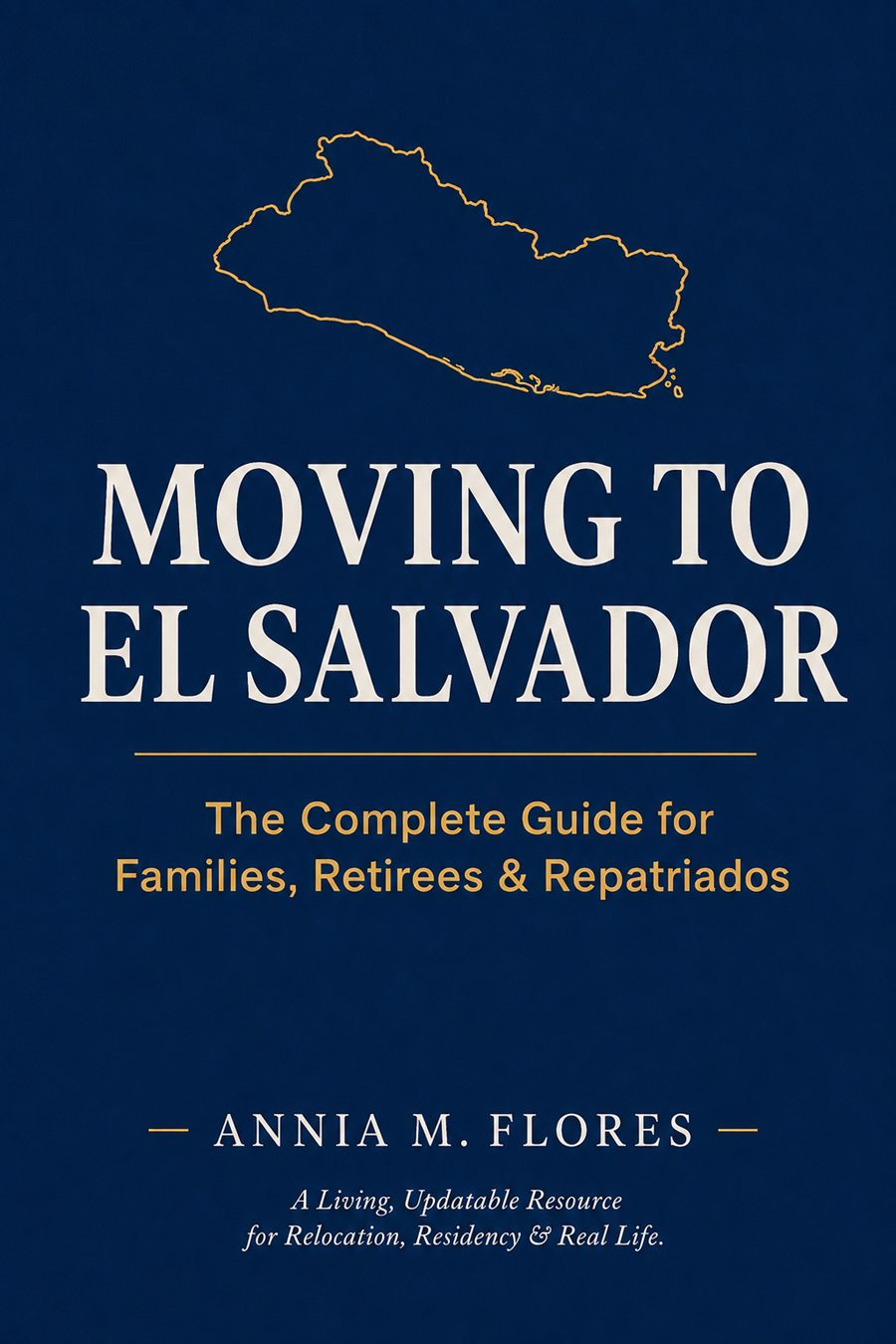
The book behind these resources
Moving to El Salvador
One family's real move, turned into a clear, step-by-step roadmap.
Paperwork and residency. Banking and taxes. Shipping a household, finding a home, schools, health care, and getting around. Written for those returning home and those arriving for the first time.